Share Your Snakebite Story
Help us document the experience of snakebite in the United States.
The Antivenom Interviews is a documentary film project about the history, present, and future of snakebite treatment — from the invention of antivenom to the emerging developments that may shape how snakebites are treated in the future.
Thousands of people in the United States are bitten by venomous snakes every year, and every case is different. Some recover quickly. Some spend days in the hospital. Some deal with tissue damage, surgery, physical therapy, lingering pain, astronomical medical bills, anxiety, or major changes to work and daily life.
We are looking for video, photos, and personal accounts from snakebite patients in the United States who are willing to share part of their experience for possible inclusion in the project.
Your story can help show what snakebite actually looks like — medically, emotionally, financially, and personally.
What Kind of Video Are We Looking For?
We are interested in any video or photos connected to your snakebite experience, including:
- The snake, if it was photographed or filmed
- The bite location
- Early swelling, bruising, or tissue changes
- The progression of the injury over time
- Emergency room or hospital footage
- Antivenom treatment
- Surgery, wound care, or follow-up appointments
- Physical therapy or rehabilitation
- Recovery at home
- Scars, mobility issues, or long-term effects
- A short video of you telling your story in your own words
Your footage does not need to be professionally shot. Phone video is completely fine. What matters most is that it is real, relevant, and usable.
Please only share material that you are comfortable allowing us to review and possibly use in the documentary, related educational materials, fundraising materials, website, social media, or other project-related contexts.
What to Say in a Video About Your Experience
If you would like to record a new video telling your story, you can simply speak naturally. You do not need a script.
A few helpful questions to answer:
- When and where were you bitten?
- What kind of snake was involved, if you know?
- What were you doing when the bite happened?
- How quickly did symptoms begin?
- How did you get medical care?
- Were you treated with antivenom?
- How long were you in the hospital?
- What was the hardest part of the experience?
- What surprised you most?
- Did you have lasting effects after the bite?
- What do you wish other people understood about snakebite?
You do not have to answer every question. Share only what you want to share.
How to Shoot Usable Video
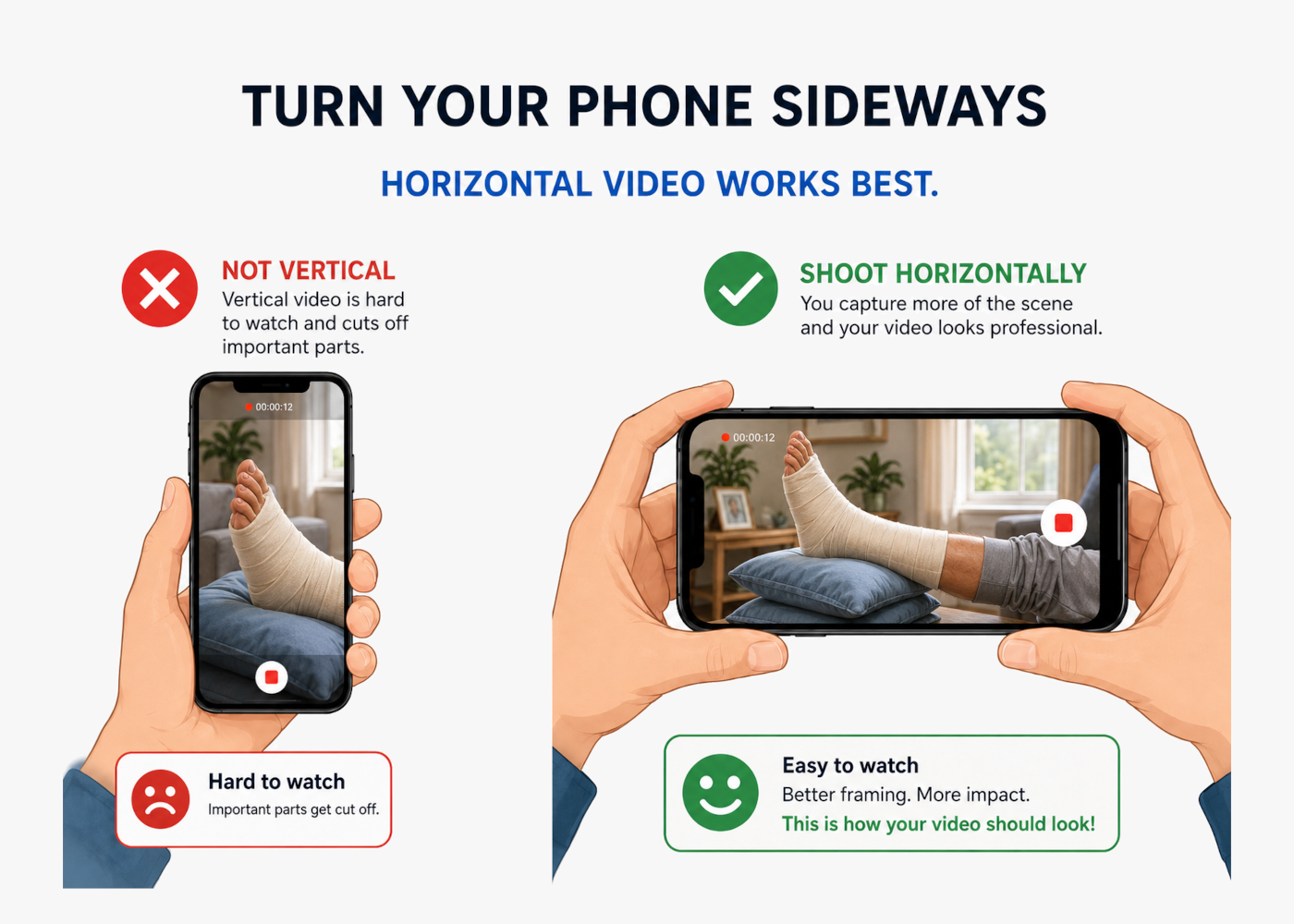
Phone video is fine. The most important things are simple:
- Please shoot horizontally. Turn your phone sideways so the video is wide, not vertical. Horizontal video works much better for documentary editing.
- Keep the camera stable. Hold the phone as steady as you can. Don't move more than necessary.
- Don’t worry about perfection. It is okay if the video feels informal. It does not need to be polished. A clear, honest, stable video is much more useful than a “perfect” one.
Sharing Existing Photos or Video
If you already have photos or video from the time of the bite, recovery, hospital stay, or treatment, we would be very grateful to review them.
Please do not edit, crop, filter, or compress the files before sending if you can avoid it. Original files are best because they preserve the highest image quality.
Helpful file types include:
- Phone videos
- Photos
- Hospital or recovery videos
- Before/after images
- Time-lapse or progression photos
- Screenshots are okay if that is all you have, but original images are better
How to Send Your Files
Because video files can be large, email usually does not work well for sending them.
The easiest options is to place your files in Google Drive, Dropbox, OneDrive, iCloud, or another file-sharing service and send us a link.
Please make sure the link is set so that we can download the files.
If you are not sure how to send large video files, that is completely okay. Send us a message and we will help you find the easiest option.
Medical Privacy
Your health information is personal. Please only share what you are comfortable sharing.
You are welcome to tell your story in your own words, but do not provide medical records, billing records, hospital documents, or private health information unless we specifically discuss that with you.
Submitting video or photos does not guarantee that they will be used in the final film. We may use some material, all of it, or none of it, depending on editorial needs, legal permissions, image quality, and the final structure of the documentary.
Safety First
Please do not handle, approach, or attempt to film venomous snakes for this project.
We are interested in footage that already exists or material that can be recorded safely after the fact. No video is worth risking another bite.
If you are currently experiencing a snakebite emergency, seek medical care immediately. Do not use this page for medical advice or emergency help.
What Happens After You Submit?
After you send your material:
- We will confirm that we received it.
- We may follow up with questions about the bite, treatment, location, dates, or the footage itself.
- We will send the appropriate release form or forms.
- We may ask whether you would be open to a longer recorded interview.
- Your material will be reviewed for possible use in the documentary or related project materials.
We deeply appreciate every person who is willing to share their story. Snakebite is often discussed in terms of statistics, treatment protocols, and antivenom supply. Those things matter. But the lived experience matters too.
By sharing your experience, you can help others understand the real impact of snakebite in the United States.